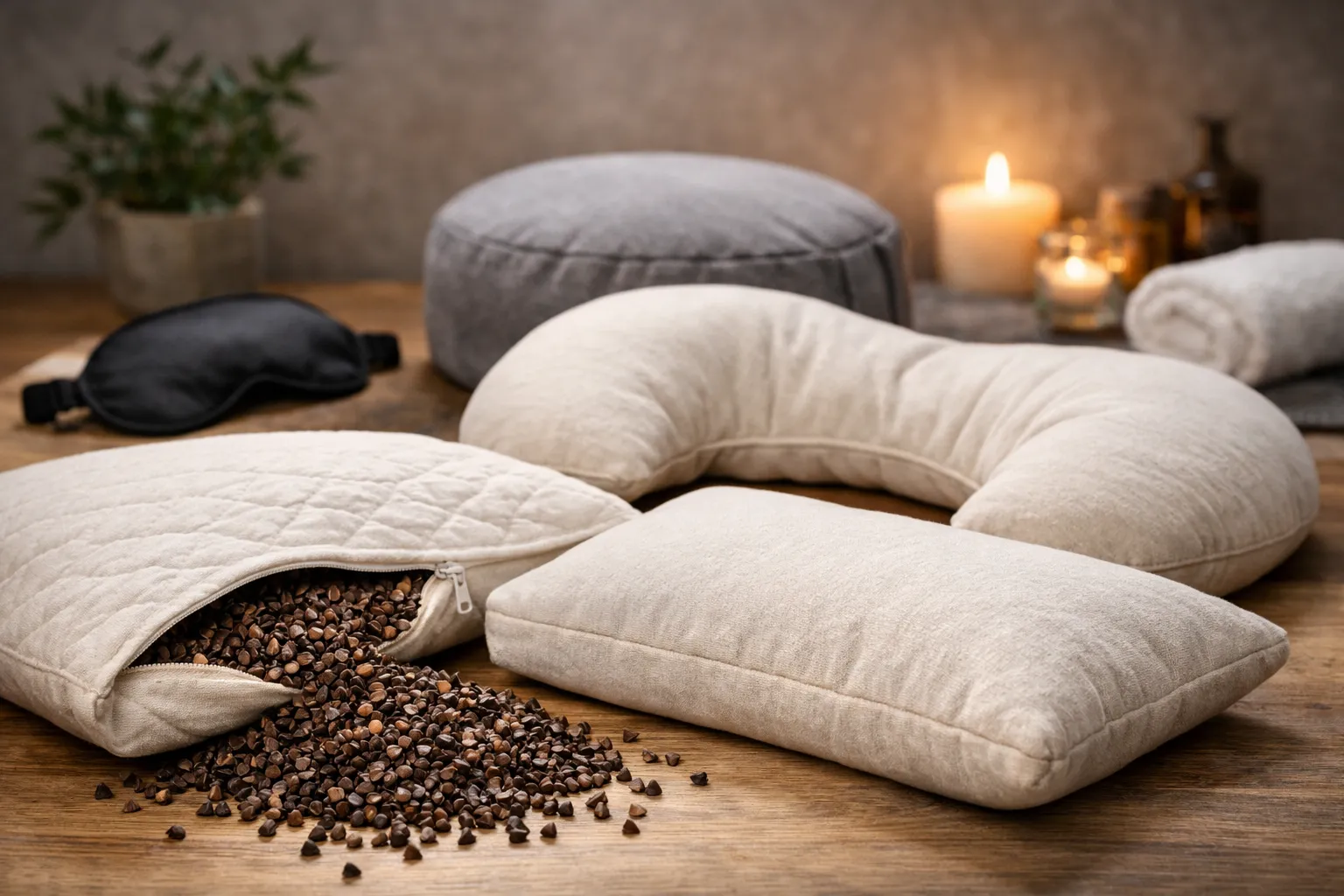

Buckwheat Pillow Explained: Benefits, Uses & Why It’s Better Than Regular Pillows
When it comes to improving sleep quality, posture, and neck support, the type of pillow you use matters more than you think. While traditional fiber and memory foam pillows dominate the market, many wellness-conscious sleepers are now switching to buckwheat pillows — a natural, breathable, and highly supportive alternative.
But what exactly is a buckwheat pillow? And why is it often considered better than regular pillows?
Let’s explore everything in detail.
What Is a Buckwheat Pillow?
A buckwheat pillow is a pillow filled with buckwheat hulls (the outer shells of buckwheat seeds) instead of synthetic fiber, foam, or down. These hulls interlock naturally to create a firm yet flexible support structure.
Unlike traditional pillows that flatten over time, buckwheat hulls:
-
Shift and contour to your head and neck
-
Maintain shape without collapsing
-
Provide stable support all night
-
Allow airflow between hulls
This makes buckwheat pillows especially popular among people dealing with neck pain, posture issues, and overheating during sleep.
How Does a Buckwheat Pillow Work?
The magic lies in the hull structure.
Each hull is small, firm, and naturally shaped to lock together while still moving slightly. When you rest your head on the pillow:
-
The hulls adjust to your exact head and neck curve
-
They distribute weight evenly
-
They hold their shape instead of sinking
This creates consistent alignment between your neck, shoulders, and spine.
Benefits of a Buckwheat Pillow
1. Superior Neck and Spine Alignment
One of the biggest reasons people switch to buckwheat pillows is spinal alignment.
Traditional pillows compress under weight, causing the neck to bend unnaturally. Buckwheat hulls maintain their structure, keeping the neck in a neutral position.
Proper alignment can help:
-
Reduce neck stiffness
-
Ease shoulder tension
-
Prevent morning headaches
-
Minimize upper back discomfort
2. Adjustable Firmness
Most buckwheat pillows come with a zipper, allowing you to:
-
Remove hulls for softer support
-
Add hulls for firmer support
-
Customize height based on sleeping position
This adjustability makes it suitable for:
-
Side sleepers
-
Back sleepers
-
Combination sleepers
3. Excellent Airflow & Cooling
If you struggle with night sweats or overheating, this is a major advantage.
Unlike foam pillows that trap heat, buckwheat hulls create natural air channels. This allows:
-
Continuous airflow
-
Reduced heat buildup
-
A cooler sleeping surface
This makes them ideal for warm climates and hot sleepers.
4. Long-Lasting Durability
Traditional pillows often lose shape within 6–18 months.
Buckwheat pillows can last 5–10 years with proper care because:
-
Hulls don’t compress permanently
-
Shape remains consistent
-
Only outer cover requires regular washing
Over time, you may only need to replace hull filling — not the entire pillow.
5. Natural & Chemical-Free
Most buckwheat pillows are:
-
Free from synthetic foam
-
Free from chemical off-gassing
-
Made from natural plant-based materials
This makes them appealing for those seeking a cleaner, more eco-conscious sleep setup.
Buckwheat Pillow vs Regular Pillow
Here’s a practical comparison:
| Feature | Buckwheat Pillow | Regular Fiber/Foam Pillow |
|---|---|---|
| Support Level | Firm & Stable | Soft but collapses |
| Adjustability | Customizable | Fixed |
| Cooling | High airflow | Traps heat |
| Durability | 5–10 years | 1–2 years |
| Spinal Alignment | Excellent | Inconsistent |
| Natural Material | Yes | Often synthetic |
Who Should Use a Buckwheat Pillow?
A buckwheat pillow may be ideal if you:
-
Experience neck stiffness
-
Wake up with headaches
-
Sleep on your side
-
Prefer firm support
-
Overheat at night
-
Want a natural sleep solution
However, if you prefer ultra-soft, plush pillows, buckwheat may feel too firm initially.
Common Concerns About Buckwheat Pillows
Is It Too Firm?
They are firmer than regular pillows — but the firmness is adjustable.
Is It Noisy?
There may be a slight rustling sound when adjusting, but it becomes unnoticeable once settled.
Does It Smell?
Natural hulls may have a mild earthy scent initially, which fades over time.
How to Care for a Buckwheat Pillow
Proper maintenance ensures longevity:
-
Use a washable pillow cover
-
Spot clean outer cover only
-
Keep filling dry
-
Occasionally sun-dry hulls to refresh
Avoid washing the hull filling directly.
How to Choose the Right Buckwheat Pillow
When selecting one, consider:
-
Shape (rectangular, crescent, cervical support)
-
Size
-
Adjustable filling
-
Breathable cotton cover
-
Quality of hulls
Choosing the right shape depends on your specific neck and posture needs.
Are Buckwheat Pillows Better Than Regular Pillows?
For people prioritizing:
-
Neck support
-
Spine alignment
-
Cooling comfort
-
Longevity
-
Natural materials
Yes, buckwheat pillows often outperform regular fiber and foam pillows.
They may not feel plush, but they provide structured support — which is what the neck actually needs.
Final Thoughts
A buckwheat pillow isn’t just another bedding accessory — it’s a functional sleep upgrade.
If you struggle with neck discomfort, overheating, or poor pillow durability, switching to a buckwheat pillow could significantly improve your sleep experience.
While it may take a few nights to adjust to the firmer feel, many users report better comfort and reduced stiffness over time.
FAQ’s about Buckwheat Pillows
1. What is a buckwheat pillow made of?
A buckwheat pillow is filled with natural buckwheat hulls, which are the outer shells of buckwheat seeds. These hulls create firm, adjustable support while allowing airflow between them. Unlike synthetic foam or fiber pillows, buckwheat pillows are plant-based and breathable.
2. Are buckwheat pillows good for neck pain?
Yes, buckwheat pillows are excellent for neck pain because they provide firm and stable support. The hulls contour to the shape of your head and neck, helping maintain proper spinal alignment and reducing pressure on the cervical area.
3. How is a buckwheat pillow different from a regular pillow?
Regular pillows made from fiber or foam compress over time and lose shape. Buckwheat pillows maintain structure, offer adjustable firmness, promote airflow, and provide better neck and spine alignment compared to traditional pillows.
4. Can side sleepers use a buckwheat pillow?
Yes, buckwheat pillows are especially beneficial for side sleepers. Their adjustable height allows users to maintain proper alignment between the head, neck, and shoulders, preventing strain and stiffness.
5. Do buckwheat pillows stay cool at night?
Yes, buckwheat pillows are naturally cooling. The spaces between the hulls allow air circulation, preventing heat buildup and making them ideal for hot sleepers or warm climates.
6. Are buckwheat pillows too firm?
Buckwheat pillows are firmer than traditional pillows, but their firmness can be adjusted by adding or removing hulls. Many users find the structured support more comfortable once they adapt to it.
7. How long does a buckwheat pillow last?
With proper care, a buckwheat pillow can last between 5 to 10 years. While the outer cover may need occasional replacement or washing, the hull filling remains durable and supportive for years.
8. Is there any noise when using a buckwheat pillow?
Buckwheat pillows may produce a slight rustling sound when you adjust your position. However, the sound is minimal and typically unnoticeable once you are settled.
9. How do you clean a buckwheat pillow?
The outer pillow cover can usually be removed and washed. The buckwheat hull filling should not be washed but can be refreshed by sun-drying occasionally. Always keep the hulls dry to maintain quality.
10. Who should use a buckwheat pillow?
Buckwheat pillows are ideal for people who experience neck stiffness, poor posture during sleep, overheating at night, or those seeking a natural and long-lasting pillow alternative.


Leave a Comment